The Way You Breathe Might Be Stressing Your Body Out
Respiration is one of the most important processes in the body.
Every cell depends on oxygen to create energy, regulate inflammation, support digestion, and maintain nervous system balance.
The way we breathe directly affects heart rate, muscle tension, circulation, hormone signaling, and how the body responds to stress.
Breathing isn’t just about getting air in and out. It’s one of the main ways the body shifts between a stressed state and a regulated state.
When breathing is shallow, fast, or mostly in the chest and mouth, the body stays in a low-level stress response. Digestion slows, muscles stay tense, and the nervous system remains on alert.
When breathing is slow, deep, and primarily through the nose and belly, the body receives a safety signal. Circulation improves. Digestion activates. Muscles relax. Stress hormones decrease.
I didn’t fully understand how much this mattered until I learned belly breathing in Ayurvedic school.
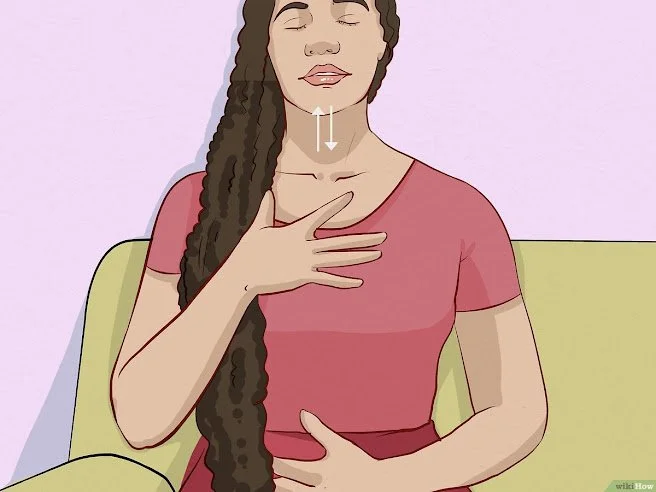
Belly breathing means inhaling slowly through your nose and letting your abdomen expand, then exhaling fully and letting it soften. The movement happens in the belly rather than the chest.
What I didn’t realize at the time was how shallow my breathing had become.
Most of my breaths were short and high in my chest. Quick inhales. Short exhales. My body felt slightly tense all the time, even when nothing stressful was happening.
Once I noticed it, I saw it everywhere.
When I began breathing into my belly consistently, my digestion improved quickly. Food no longer felt like it was just sitting there.
Gas moved instead of building up. My abdomen felt softer and warmer. Digestion didn’t feel forced. It simply worked better.
The nervous system effect was just as noticeable.
Slow, deep belly breathing signals safety to the body. When breathing slows down and deepens, the stress response decreases. My shoulders relaxed. My jaw unclenched. My abdomen stopped gripping all day.
I hadn’t realized how much tension I was carrying until it eased.
Another important piece is how you breathe, not just where.
Mouth breathing keeps the body in a mild stress state. It increases heart rate, dries tissues, and signals urgency to the nervous system. Many people default to mouth breathing when they are stressed, distracted, or sleeping poorly.
Nose breathing does the opposite. It slows airflow, improves oxygen use, and helps regulate the nervous system. When I focused on breathing through my nose during belly breathing, the calming effect was stronger and more consistent.
This is something that surprises many parents.
Children who breathe mostly through their mouths often stay in a more activated state. Chronic mouth breathing can contribute to irritability, poor sleep, and emotional dysregulation.
In some cases, frequent temper tantrums are linked to chronic mouth breathing, especially if the child also has congestion or enlarged tonsils.
Encouraging nasal breathing, especially during calm moments and sleep, can significantly improve regulation over time.
I also began slowing the rhythm of my breath overall. Instead of rushing inhales and exhales, I let them become steady and even. That steady rhythm created a more regulated baseline throughout the day.
This kind of breathing does not suppress symptoms. It supports the systems responsible for digestion, muscle tone, lung function, and nervous system balance.
It helps digestion move.
It helps release trapped gas.
It reduces unnecessary muscle tension.
It improves lung expansion.
It lowers stress activation.
And it requires nothing external.
Sometimes I practice before meals. Sometimes after. Sometimes when I notice I’m holding my breath while working or thinking.
You don’t need to turn belly breathing into a complicated practice. Just notice your breathing pattern occasionally. Let it drop into the abdomen. Slow the rhythm. Keep the breath in your nose.
Small shifts in breathing patterns can create noticeable changes in digestion, tension levels, and overall regulation.
