
Fenugreek Seed Gel
Medicinal Profile of
Fenugreek Seed Gel
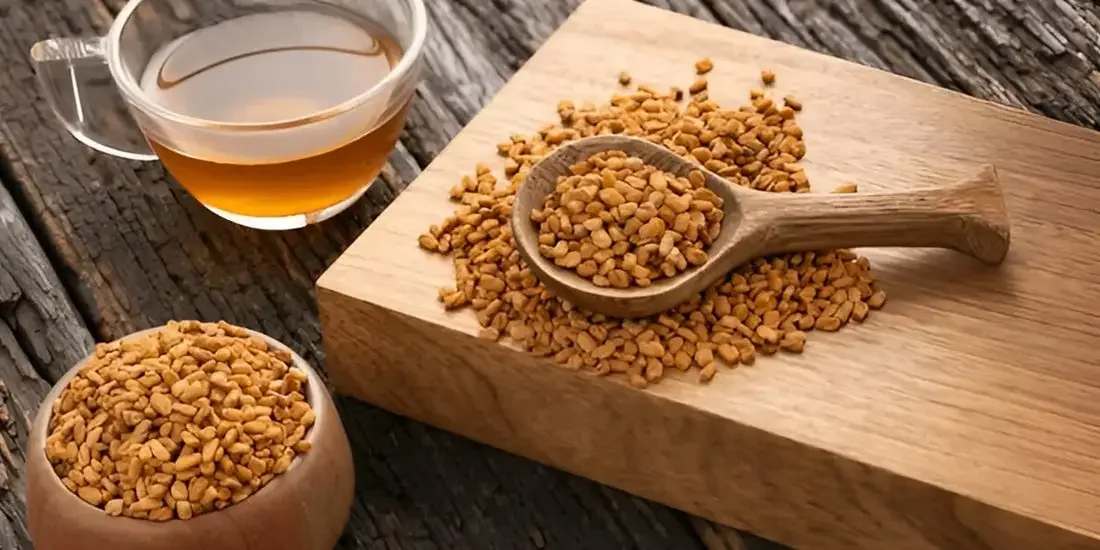
Fenugreek seed gel (made by soaking or gently simmering whole fenugreek seeds) produces a mucilaginous, moistening gel that hydrates dry mucosa and stimulates gentle movement through warming, circulating qualities. Fenugreek is unique among mucilaginous demulcents because it moistens and activates movement, rather than slowing things down.
-
👉 Tastes describe the initial impression a food or herb leaves on the tongue, and they reveal its deeper actions in the body, shaping digestion, circulation, and tissue response.
Bitter - signals digestive activation and bile stimulation.
Sweet (when soaked) - reflects its moistening, nourishing quality.
This makes fenugreek both a digestive bitter and a moistening demulcent, a rare combination.
-
👉Qualities describe the felt nature of a substance or practice, and how it acts in the body beyond nutrients or chemistry.
Moistening (mucilaginous) - Fenugreek forms a slippery gel when mixed with water, which coats and hydrates dry mucosal tissues, reducing friction and irritation.
Circulating / Stimulating - Unlike cooling demulcents, fenugreek produces a gentle warming effect that activates circulation and digestive movement in areas of dryness and stagnation.
Softening / Emollient - The gel softens hardened, dry stool and tissues by retaining moisture and improving pliability, making elimination smoother and less strained.
-
Gel (best for mucilage):
Soak whole seeds in warm water overnight or simmer gently.Slurry (strongest):
Blend the gel + seeds (for lubrication + stronger movement effect).Tea (warming):
Simmer whole seeds 10–15 mins (demulcent + carminative).Capsules are not equivalent, no mucilage is extracted.
Indicated Patterns by Affinity
👉 Indicated patterns describe the functional state of the body and its organs and/or tissues, showing whether they are dry, atrophied, too damp (pressure), stagnant, lax, inflammed, sluggish, tense or underactive. The Primary Indicated Pattern is the main state where this remedy works best. Secondary Indicated Pattern(s) are the patterns that often develop over time when the primary state is left unaddressed. The primary pattern must be supported first, as this allows the secondary patterns to naturally ease or resolve.
👉Affinities are the organ systems and tissues where the remedy acts most strongly.
-
Dryness + Congestive Pressure + Hypometabolic / Hypofunction (Primary Indicated Pattern)
A terrain where mucosal dryness causes stool to lack lubrication and weak digestive activation leads to backup and pressure, resulting in dry stool that is difficult to move, often with bloating or trapped gas.Examples: Dry constipation with bloating or trapped gas, Feeling “blocked,” stool is dry but won’t move, Pressure without release, especially after eating, Constipation that improves with warmth (tea, soups)
Fenugreek’s mucilaginous quality restores moisture to the mucosa and stool, while its warming + bitter + circulating qualities stimulate movement and relieve congestive pressure.
Dryness +Atrophy + Depressed + Dilution (Secondary Indicated Pattern) Dry mucosa due to depletion and weak digestive secretions, not just lack of fluids.
Examples: Dry stool + low appetite, Dry mouth or throat during fasting or under-eating, Constipation worsens with stress or skipping meals, Digestion feels “cold, slow, quiet”
The mucilage replenishes moisture while its gentle warming bitter quality restores activation, improving digestive tone and secretions so mucosa can rebuild.
-
Dryness + Dysregulated / Hyporesponsive + Dilution (Secondary Affinity)
A terrain pattern where blood sugar fluctuations and inconsistent metabolic signaling weaken digestive responsiveness, causing mucosa to dry out and digestive secretions to become insufficient or diluted.
Examples: Dry mouth + constipation after sweet meals, Energy crashes paired with dryness, Constipation during intermittent fasting
Fenugreek’s soluble fiber slows glucose absorption, stabilizing terrain fluctuations that dry mucosa and disrupt gut motility.
Hypometabolic + Dryness + Hypofunction (Secondary Indicated Pattern)
When cold, low-metabolic activation leads to dryness and weak motility.
Examples: Digestion slows with cold weather or cold foods, Dry stool + low appetite + fatigue, Stool feels like it “just sits there”
Fenugreek warms + stimulates activation, restoring gastrointestinal tone while mucilage restores moisture.
-
👉 Medicinal actions describe the specific ways a food influences organ systems and body functions.
Digestive System
Demulcent (mucosal coating) - The gel coats and hydrates dry mucosa in the GI tract, reducing friction and irritation.
Hydrating stool-softener - Mucilage binds water and draws it into stool, improving moisture and ease of passage.
Circulating digestive stimulant (bitter + warming) - Enhances digestive activation, bile flow, and metabolic movement.
Carminative (gas relieving) - Reduces bloating and trapped gas without irritating intestines.
Bulk-forming motility support - Provides gentle mass to stimulate peristalsis.
Metabolic / Endocrine System
Blood sugar modulator - Slows carbohydrate absorption and improves insulin sensitivity.
-
👉 Constituents are the natural compounds in a food that give rise to its actions in the body.
Mucilage polysaccharides - provide moisture and coating
Saponins - improve bile flow and emulsify fats
Alkaloids (trigonelline) - metabolic activation
Soluble fiber - softens stool + stabilizes glucose curves
-
Cold-soaked gel (mucilage) 2nd Degree - Hydrating + softening
Simmered tea (warm mucilage + bitters) 2nd Degree - Circulating + activating
Slurry (gel + blended seeds) 3rd Degree - Strongest lubricating + stimulating action
-
May reduce medication absorption (separate by 2 hours).
May enhance hypoglycemics (metformin, insulin).
Caution with thyroid meds (fenugreek may reduce absorption).
-
Avoid in pregnancy in large doses (stimulating to uterus; tea is fine).
Gas reduction is dose-dependent, avoid dry powder without hydration.

-
Traditional Sources
Ayurvedic classical use — dry constipation + sluggish digestion
Grieve, M. (1931). A Modern Herbal.
Weiss, R. F. (1999). Herbal Medicine.
Modern Sources
Journal of Food Science (2016) — mucilaginous hydration properties
International Journal of Medical Sciences (2017) — insulin sensitivity
Journal of Ethnopharmacology (2014) — saponins stimulate bile flow
