
Foot/Leg Elevation
Functional Profile of
Foot/Leg Elevation
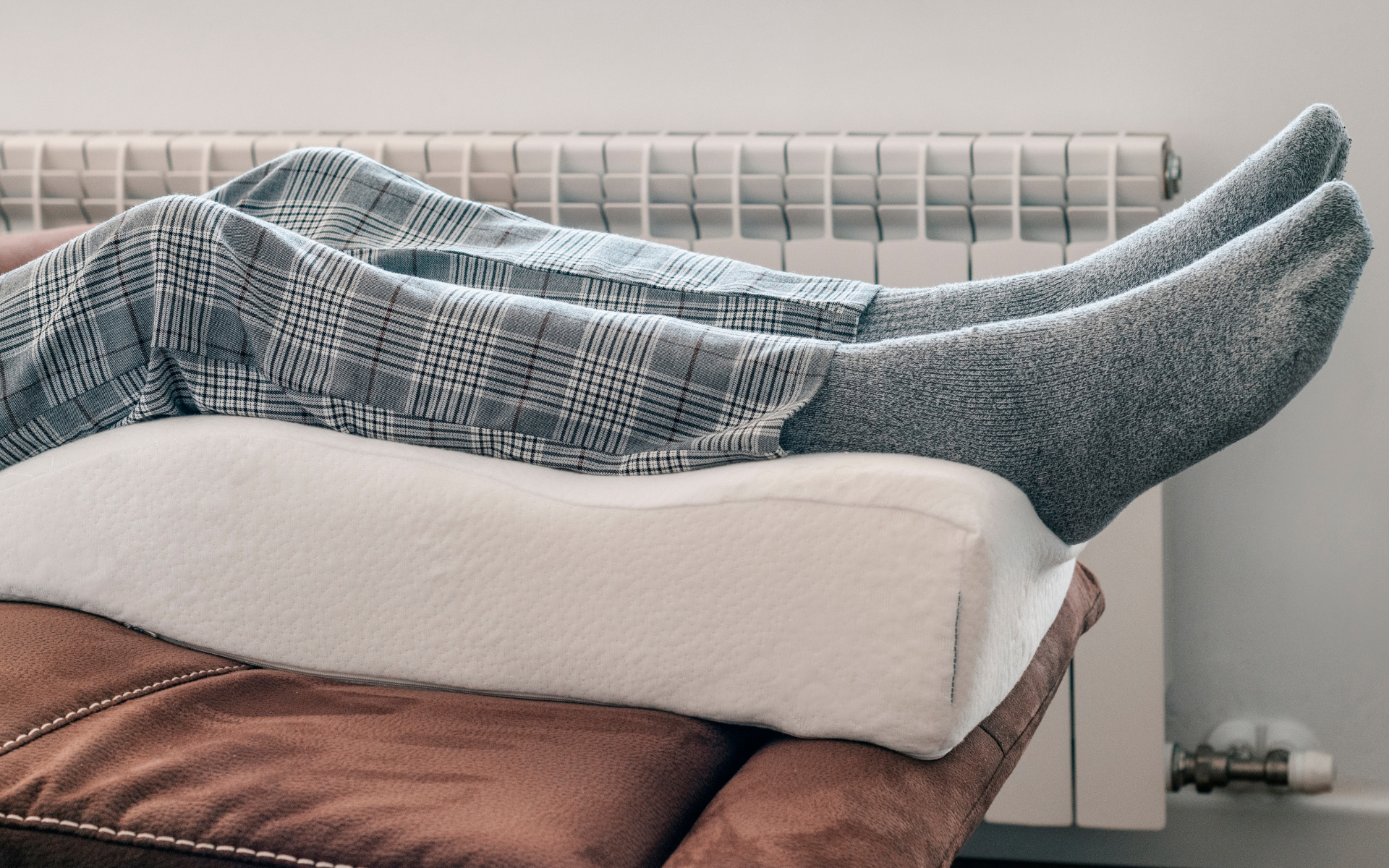
Foot/leg elevation reduces pressure in the lower body and helps fluid return toward the heart and lymphatic system. It is most supportive in damp, congestive, or stagnant terrain patterns where puffiness, heaviness, or fluid retention accumulate in the legs, feet, or lower abdomen.
-
Reduces hydrostatic pressure in veins
Promotes venous return (blood flow back to the heart)
Encourages lymphatic drainage away from the legs
Decreases pooling of fluid and heaviness in lower extremities
Relaxes sympathetic nervous system (shifts toward parasympathetic)
-
Elevating the legs removes gravitational pressure so fluids can move freely
Reduces pooling and stagnation in lower extremities
Shifts from sympathetic → parasympathetic (relaxation + ease)
Unlike interventions that force drainage (diuretics), elevation allows the body to reset its pressure gradient so circulation can resume naturally.
-
Elevate legs above heart level
10–20 minutes per session
Best done: after long periods of sitting or standing, before bed
Most effective position: legs up the wall or feet on pillows
Energetic Pairings (to amplify effect):
Combine with deep diaphragmatic breathing → enhances venous return
Drink warm herbal tea with ginger or nettle → supports circulation + lymph
Use after sauna/heat therapy to move loosened fluid upward
-
Avoid if terrain is in:
Cold + Dry + Tense (leg elevation may increase constriction)
Acute clot risk (DVT, post-surgery — only with medical clearance)
Severe arterial disease (elevation may reduce blood flow to feet)
Elevation moves fluid upward — but if tissue tone is too tight or dry, fluid can’t move.
-
No direct medication interactions
If on diuretics → may increase drainage effect
If on blood thinners → safe, but swelling should be monitored by clinician
Indicated Patterns
👉 Indicated patterns describe the functional state of the body and its organs and/or tissues, showing whether they are dry, atrophied, too damp (pressure), stagnant, lax, inflammed, sluggish, tense or underactive. The Primary Indicated Pattern is the main state where this remedy works best. Secondary Indicated Pattern(s) are the patterns that often develop over time when the primary state is left unaddressed. The primary pattern must be supported first, as this allows the secondary patterns to naturally ease or resolve.
-
Damp + Congestive Stagnation (Primary)
Excess fluid or metabolic waste accumulates in lower tissues due to slowed circulation or lymph drainage.Examples:
Puffy ankles or feet
Leg heaviness at the end of the day
Tightness or pressure when sitting or standing too long
Lower-body fluid retention (legs, feet, lower abdomen)
Feeling “stuck, puffy, or heavy” in circulation
How it helps:
Elevation removes the gravitational barrier, allowing lymph and venous blood to move upward. This relieves stagnation, decreases swelling, and supports terrain decongestion without forcing the body to push.In terrain terms: elevation redistributes fluid and releases pressure buildup.
-
Tension + Excitation in the cardiovascular axis
(e.g., sympathetic dominance causing vasoconstriction → tight + restricted flow)Elevation calms the nervous system by reducing cardiovascular load.

-
O’Donnell, T. F. (2014). Venous return and leg elevation. Phlebology.
Partsch, H. (2008). Compression and leg elevation in chronic venous insufficiency. Journal of Vascular Surgery.
American Heart Association: Hydration, circulation, and venous return guidance (2022).
