
Juicing (Fresh Vegetable/Fruit Extraction)
Functional Profile of
Juicing (Fresh Vegetable
/Fruit Extraction)
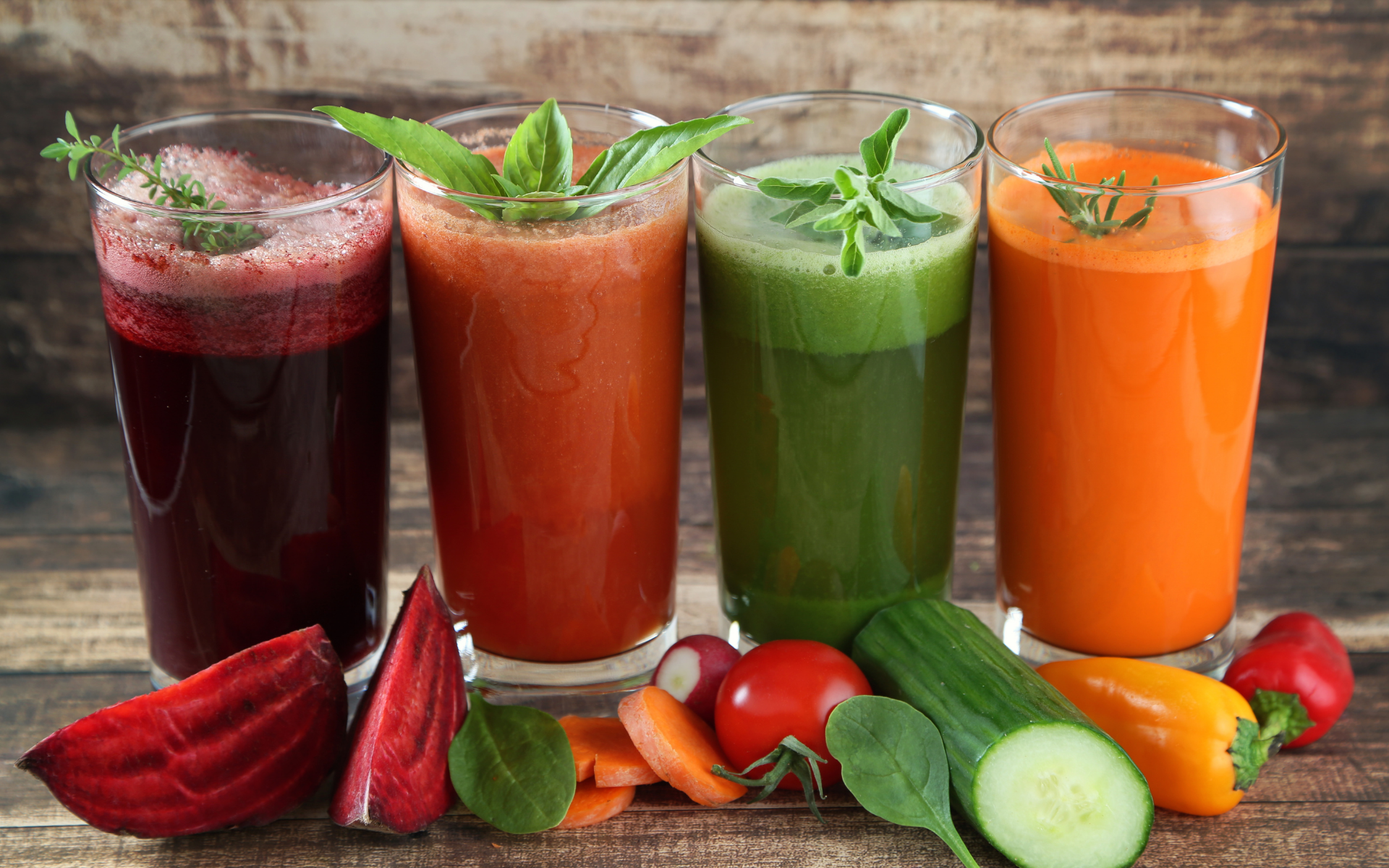
Juicing is the process of extracting the liquid essence of fruits and vegetables while separating most of the fiber. This concentrates vitamins, minerals, enzymes, and phytonutrients into a readily absorbable form. Traditionally, fresh juices have been used as both food and medicine, especially in convalescence or for cleansing. While juicing can provide rapid nourishment and hydration, it alters the whole-food matrix, emphasizing certain benefits while removing others.
-
👉Qualities describe the felt nature of a substance or practice, and how it acts in the body beyond nutrients or chemistry.
Light – Lightness refers to a quality that does not weigh heavily on digestion or metabolism, offering nourishment without burdening the body’s processing power.
Moistening – Moistening is the ability to replenish fluids and restore hydration to tissues, countering dryness and atrophy.
Penetrating – Penetrating describes a quality that moves quickly and deeply into tissues, delivering nutrients in a concentrated and direct form.
Circulating – Circulating is the quality of enhancing movement of fluids and nutrients through the blood and tissues, supporting systemic distribution.
-
Centrifugal juicing: fast, generates some heat/oxidation, best for quick consumption.
Masticating/cold-press juicing: slower, preserves more enzymes and nutrients, yields richer juice.
Combination: mixing vegetable-heavy base with small amounts of fruit for palatability.
-
Fiber Removal → Accelerated Absorption
Removing insoluble fiber reduces the work of mastication and enzymatic breakdown.
Nutrients (vitamin C, carotenoids, polyphenols, minerals) move more quickly into the small intestine for absorption.
Glucose and fructose enter the bloodstream faster, explaining why juices can spike blood sugar more rapidly than whole produce.
Phytonutrient Concentration
Juicing concentrates water-soluble nutrients (vitamin C, B vitamins, polyphenols).
Many antioxidants and pigments remain stable in juice form, providing immediate free-radical scavenging capacity.
Cold-pressed methods better preserve enzyme activity (like peroxidase, catalase, polyphenol oxidase) compared to heat-generating centrifugal methods.
Hydration + Electrolyte Delivery
Fresh juice is ~85–95% water, carrying dissolved minerals (potassium, magnesium, sodium).
The isotonic profile of many juices enhances cellular hydration, replenishing fluids similarly to oral rehydration solutions.
Reduced Digestive Load
With fiber and cellulose removed, gastric emptying is faster.
Less energy is spent on mechanical and enzymatic digestion, freeing metabolic resources for repair and immune defense.
Antioxidant + Anti-inflammatory Pathways
Polyphenols and carotenoids delivered via juice activate Nrf2 signaling pathways, upregulating endogenous antioxidant enzymes (glutathione peroxidase, superoxide dismutase).
They downregulate NF-κB, lowering pro-inflammatory cytokines during immune stress.
Gut Microbiome Dynamics
Lack of fiber reduces prebiotic input to the microbiome.
However, polyphenols and secondary plant metabolites in juice can still modulate microbial activity (e.g., promoting Lactobacillus growth, inhibiting pathogens).
Long-term juicing diets may starve beneficial microbes if not balanced with whole foods.
Metabolic Energy & Terrain Reset
Rapid carbohydrate and micronutrient absorption provide quick ATP substrate availability.
In depleted states, this acts like a “jump-start” for metabolism.
In overuse, it may encourage excitatory/irritative terrain (blood sugar spikes, metabolic swings).
-
Fiber Content
Juicing: Removes most insoluble + soluble fiber → nutrients hit the bloodstream fast, but no bulk to slow absorption.
Smoothies: Retain whole fruit/veg fiber (though mechanically broken down). This slows digestion, stabilizes blood sugar, and feeds the microbiome.
Nutrient Absorption
Juicing: Rapid nutrient saturation; more immediate, but shorter-lived.
Smoothies: Slower absorption, but more balanced and sustained nutrient release.
Digestive Load
Juicing: Minimizes digestive effort → ideal when digestion is weak, in convalescence, or when you want quick replenishment.
Smoothies: Requires more digestive effort (still less than whole chewing) → better for everyday nourishment and metabolic stability.
Terrain Effects
Juicing: Light, penetrating, moistening, circulating. Best for dehydration, atrophy, or depletion. Can worsen excitatory/irritative or damp/stagnant terrain if overused.
Smoothies: Heavy, stabilizing, moistening, nutritive. Best for depletion with dryness, hypometabolic states, and people who need building. Less likely to destabilize blood sugar.
Microbiome Impact
Juicing: Limited prebiotic support (fiber is gone).
Smoothies: Feed beneficial bacteria with fiber and polyphenols, maintaining gut terrain.
Juicing = rapid delivery, medicinal, short-term supportive and Smoothies = whole-food nourishment, sustaining, everyday supportive.
Indicated Patterns by Affinity
👉 Indicated patterns describe the functional state of the body and its organs and/or tissues, showing whether they are dry, atrophied, too damp (pressure), stagnant, lax, inflammed, sluggish, tense or underactive. The Primary Indicated Pattern is the main state where this remedy works best. Secondary Indicated Pattern(s) are the patterns that often develop over time when the primary state is left unaddressed. The primary pattern must be supported first, as this allows the secondary patterns to naturally ease or resolve.
👉Affinities are the organ systems and tissues where the remedy acts most strongly.
-
Atrophy / Degenerative (Primary Indicated Pattern) – Atrophy refers to a state of weakened or under-functioning digestion where tissues have lost tone and the ability to fully assimilate nutrients.
Examples: low appetite, malabsorption, nutrient deficiencies after chronic illness.
Juicing is light and penetrating, delivering nutrients without the burden of breaking down fiber. Its moistening quality directly addresses dryness and tissue atrophy, while the concentrated taste of fresh fruits/vegetables supplies a restorative charge to digestive tissues.
Hypofunction / Hypometabolic (Secondary Indicated Pattern) – Hypofunction describes slowed or depressed digestive fire and low enzyme activity, where food moves sluggishly and assimilation is incomplete.
Examples: post-viral fatigue, postpartum weakness, convalescence after fever.
The liquid, circulating quality of juice provides nourishment in a form that bypasses weak digestive processes. Its stabilizing effect offers quick hydration and minerals that restore terrain function without heavy metabolic demand.
-
Depleted / Hyporesponsive (Primary Indicated Pattern) – Hyporesponsive immunity presents as lowered defense, slow recovery, or repeated illness due to weakened reserves.
Examples: frequent colds, slow recovery from flu, immune collapse after stress.
Juicing floods the system with bioavailable antioxidants and vitamin-rich compounds, quickly penetrating into circulation. Its moistening and stabilizing actions replenish lost fluids, restore terrain balance, and spark immune responsiveness without overtaxing digestion.
Congestive Heat / Irritative (Secondary Indicated Pattern) – Congestive heat occurs when immune activity overshoots, leading to irritative inflammation without sufficient drainage.
Examples: lingering fevers, hot inflamed mucous membranes, irritative coughs.
Juicing provides hydrating, cooling, and stabilizing qualities that help temper excess heat while washing tissues with fluid. Its penetrating action assists in clearing irritative byproducts while sustaining immune strength.
-
Dehydration / Dryness (Primary Indicated Pattern) – Dryness represents lack of adequate fluids in circulation and tissues, impairing nutrient delivery and waste removal.
Examples: feverish dehydration, dry skin, constipation due to lack of moisture.
Juicing is inherently moistening and hydrating. Its penetrating and circulating qualities move fluid quickly into the bloodstream, restoring systemic hydration and nourishing tissues that have become depleted.
Congestive Pressure / Toxic Congestion (Secondary Indicated Pattern) – Congestive states in circulation show up as stagnation of fluids, impaired detoxification, and build-up of metabolic waste.
Examples: sluggish circulation, edema, toxic overload.
While not strongly eliminative, juicing’s light, fluid quality helps dilute and flush stagnant fluids. The stabilizing effect reduces heat-driven congestion, while circulating qualities move nutrients into tissue and support gentle detoxification pathways.
Note: These are core affinities of the act of juicing, not tied to specific fruits or vegetables. Specific fruit or vegetable will layer on additional affinities, but juicing itself is indicated primarily where light, fluid, penetrating nourishment is needed to restore terrain balance.
-
👉 Medicinal actions describe the specific ways a food influences organ systems and body functions.
Digestive System
Eases assimilation: nutrients are delivered in liquid form without fiber bulk, making them easier to absorb for those with weak or overburdened digestion.
Reduces digestive effort: spares energy normally used for breaking down fiber and cellulose.
Immune System
Supports rapid nutrient delivery: concentrated phytonutrients and vitamins reach circulation faster, aiding immune resilience.
Terrain strengthening: regular juicing nourishes reserves and creates a more resilient baseline (especially after illness).
Circulatory & Fluid System
Hydrating: provides immediate hydration to tissues.
Circulating effect: liquid delivery increases blood flow to distribute nutrients more quickly than solid food.
Metabolic System
Quick energy source: delivers sugars and micronutrients in an easily available form, bypassing some digestive steps.
Terrain modulator: can either stabilize (when greens dominate) or energize (when fruits dominate), but the action of rapid delivery itself remains.
Restorative / Whole-Body
Convalescent support: long used for people recovering from illness or exhaustion, when chewing and digestion are too taxing.
Cleansing action: separates and highlights the "essence" of produce, promoting elimination and renewal through hydration + rapid nutrient replenishment.
-
Mild to moderate — not a drug-like intervention but a potent nutritive therapy depending on ingredients, dose and frequency.
-
Long term juicing diets
Indicated: very short-term (1–3 days) as a reset, post-illness when chewing is difficult, or as part of a supervised cleanse.
Contraindicated: in children, pregnant/postpartum individuals, those with low reserves, chronic hypometabolic terrain, or anyone needing protein/fat for recovery.
Depleting (if prolonged):
Can lead to hypometabolic patterns (slowed metabolism, fatigue, coldness) due to lack of protein/fat.
Exacerbates hyporesponsive or atrophic states by weakening tissue integrity without building blocks.
Can worsen blood sugar instability (excitation/irritation patterns) if fruit-heavy.
May trigger damp/stagnation if juices are overconsumed without balancing elimination.

-
Balch, P. A. (2002). Prescription for Nutritional Healing. Avery Publishing Group.
– Includes traditional naturopathic use of fresh juices for convalescence and detox.Gerson, M. (1958). A Cancer Therapy: Results of Fifty Cases. Totality Books.
– Early therapeutic use of vegetable juices in clinical nutrition protocols.Kirschmann, J. D., & Dunne, L. J. (2000). Nutrition Almanac. McGraw-Hill.
– Nutrient profiles and benefits of fresh fruit and vegetable juices.National Center for Complementary and Integrative Health (NCCIH). (2021). Detoxes and Cleanses: What You Need To Know.
– Official summary on juicing/cleansing diets, safety, and limitations.Slavin, J. L., & Lloyd, B. (2012). Health benefits of fruits and vegetables. Advances in Nutrition, 3(4), 506–516.
– Overview of micronutrients, antioxidants, and disease-preventive roles of produce.Stephenson, J. (2018). Juicing and blending of fruits and vegetables: impact on nutrition and health. Food Science and Nutrition, 6(2), 344–355.
– Discusses differences between whole foods, juicing, and blending.Walker, N. W. (1970). Fresh Vegetable and Fruit Juices: What’s Missing in Your Body. Norwalk Press.
– Classic naturopathic work on the therapeutic uses of fresh juices.World Health Organization (WHO). (2003). Diet, Nutrition and the Prevention of Chronic Diseases.
– Notes the contribution of fruit and vegetable intake to hydration, micronutrient density, and chronic disease prevention.
