Kava Root (Piper methysticum)
Medicinal Profile of
Kava Root Powder
(Piper methysticum)

Kava root (Piper methysticum), native to the South Pacific and traditionally prepared as a cold-water infusion, has been used ceremonially and medicinally for centuries to promote relaxation and social bonding. Today, it’s valued for its ability to reduce stress, support sleep, and relieve muscular tension without dulling mental clarity. Kava contains kavalactones, a group of fat-soluble compounds that act on the nervous system to ease tension, calm anxiety, and relax muscles without impairing cognition at traditional doses. However, many commercial “kava” products on the market today are actually kavalactone isolates or concentrated extracts. These forms are far more potent and can be habit-forming or straining to the liver when frequently used.
In contrast, whole-root Kava, traditionally prepared in cool or lukewarm water is gentler, safer, and terrain-supportive, aligning with the body’s natural rhythm and relaxation response rather than overpowering it. Isolates or alcohol-based extractions should be approached with caution, as they can easily move the terrain from gentle relaxation into depletion or imbalance when used excessively. From a terrain perspective, Kava primarily supports individuals showing tension and excitation patterns here the nervous system is overactive, muscles are tight, and emotional energy remains trapped in the upper body. Its relaxing, grounding, and stabilizing nature releases internal constriction, encourages downward flow, and restores calm to the nervous and muscular systems.
It is also helpful secondarily for erratic regulation terrains, where inconsistent energy patterns cause anxiety, restlessness, or racing thoughts. By promoting rhythmic relaxation and balanced tone, Kava helps re-establish the body’s natural parasympathetic rhythm.
-
👉 Tastes describe the initial impression a herb leaves on the tongue, and they reveal its deeper actions in the body, shaping digestion, circulation, and tissue response.
Pungent / Acrid – Activating and penetrating, moving quickly into the tissues and producing fast-acting effects on the nerves.
Bitter – Clearing and stabilizing, helping to reduce excess tension, heat, and overstimulation in the body.
-
👉 Qualities describe the felt nature of a substance or practice, and how it acts in the body beyond nutrients or chemistry.
Heavy – Produces a grounding, sedative heaviness that quiets mental chatter and slows down racing thoughts.
Stabilizing – With short term use, Kava’s bitter quality helps stabilize an overactive nervous system, reducing excess stimulation.
Drying – With prolonged use in those who are prone to slow metabolisms, dryness, depletion or weakness, may deplete even more fluids and dry tissues, seen in dry mouth, sluggish bowels, or skin roughness.
-
Traditional Aqueous Extraction
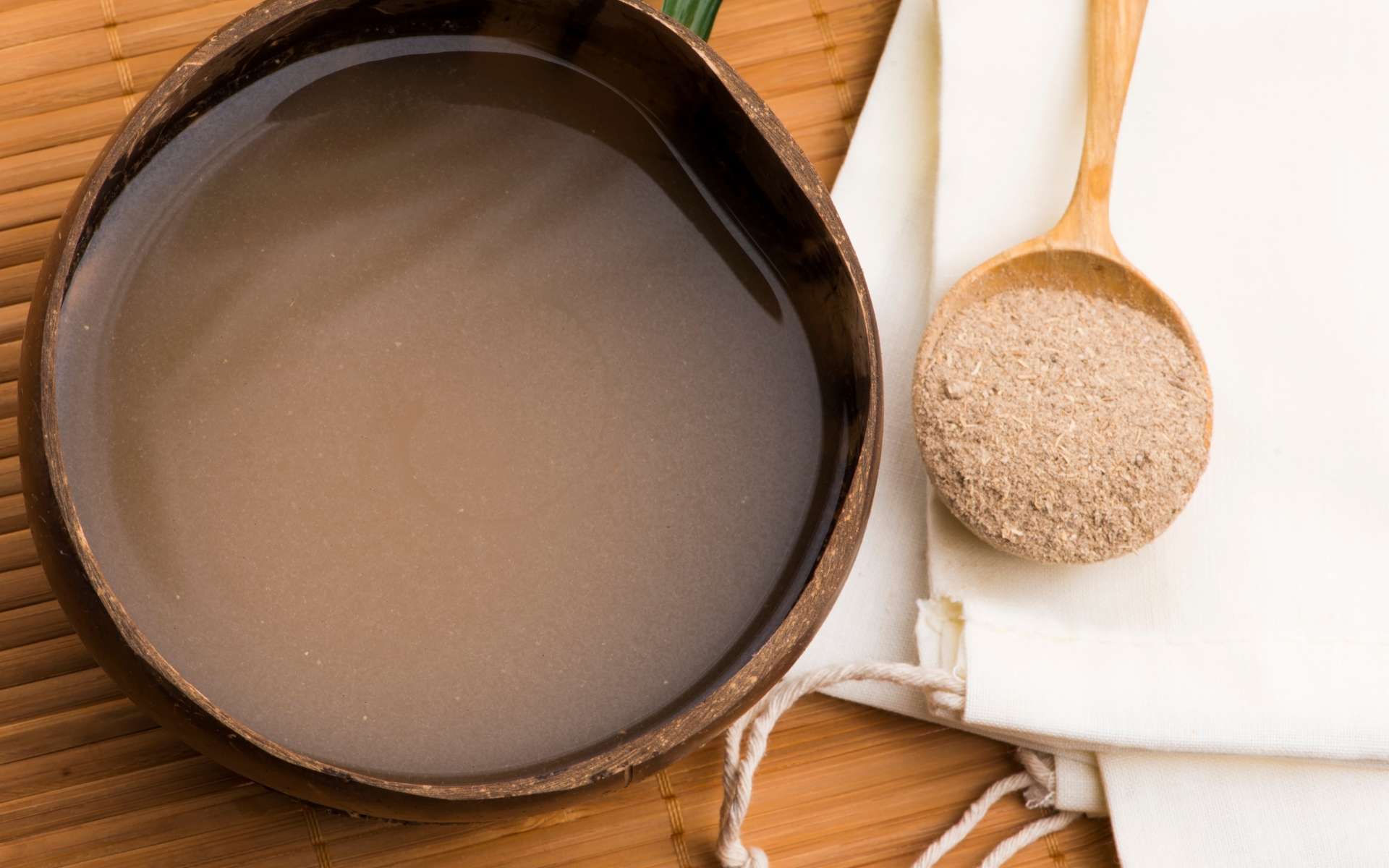
Kava root is kneaded or ground in cool or lukewarm water, sometimes with a small amount of fat such as coconut milk or cream. The fat helps extract kavalactones, the active compounds responsible for Kava’s relaxing effects.
This is the most culturally authentic and spiritually neutral method — aligning with traditional Pacific Island preparation. It produces a balanced, smooth, and grounding effect that relaxes without heavy sedation.Glycerite Extract (1:5)
Made with vegetable glycerin instead of alcohol, this method is suitable for alcohol-free lifestyles, including Muslim users. However, glycerin is less efficient at dissolving kavalactones, which are fat-soluble compounds. This makes the glycerite gentler and less potent, best suited for mild stress, restlessness, or nervous tension rather than deep muscle relaxation.Capsules or Powder (Fat-Based Beverage)
Kava powder or standardized extract can be mixed into warm water, milk, or coconut milk. The presence of fat enhances kavalactone absorption.
This form is convenient and Halal-friendly, providing moderate relaxation and mental calm. However, the effects are often shorter-lived and depend on the quality and freshness of the powder.Alcohol Tincture (40–60%) — Not Permissible in Islam
Although alcohol extracts a broader spectrum of compounds and yields the strongest pharmacological effects, this method is prohibited for Muslims due to the use of ethanol. It’s mentioned here for educational completeness only, as a point of comparison in potency, not as a recommended option.
Indicated Patterns by Affinity
👉 Indicated patterns describe the functional state of the body and its organs and/or tissues, showing whether they are dry, atrophied, too damp (pressure), stagnant, lax, inflammed, sluggish, tense or underactive. The Primary Indicated Pattern is the main state where this remedy works best. Secondary Indicated Pattern(s) are the patterns that often develop over time when the primary state is left unaddressed. The primary pattern must be supported first, as this allows the secondary patterns to naturally ease or resolve.
👉Affinities are the organ systems and tissues where the remedy acts most strongly.
-
Excitation (Primary Indicated Pattern) – When the nervous system is overactive, creating agitation or restlessness. Examples: racing thoughts with anxiety, restlessness preventing sleep, nervous overdrive leading to irritability.
Dysregulated (Secondary Indicated Pattern) – When nervous rhythms swing between agitation and collapse. Examples: anxiety alternating with fatigue, mood swings from nervous exhaustion, stress cycles that lead to nervous crashes.
-
Tension / Spasmodic (Primary Indicated Pattern) – When muscle tightness or spasms are driven by nervous overactivity. Examples: neck and shoulder tightness linked to stress, low back tension with nervous overlay, restless muscle twitching that eases with relaxation.
Congestive Pressure (Secondary Indicated Pattern) – When restricted blood flow worsens musculoskeletal discomfort. Examples: headaches from tight muscles restricting flow, heavy limbs from restricted circulation, pelvic tension contributing to discomfort.
-
Tension / Spasmodic (Primary Indicated Pattern) – When muscle spasm or nervous tightness restricts urinary flow. Examples: Painful urinary spasm linked to anxiety or nervous excitation, Difficulty urinating from pelvic floor tension, Irritative bladder cramping that improves with relaxation.
Excitation (Secondary Indicated Pattern) – When nervous-driven overactivity irritates urinary function.
Examples: Stress-induced urgency or frequency, Nervous agitation worsening urinary irritation, Restlessness that heightens pelvic tension.
-
👉 Medicinal actions describe the specific ways a food influences organ systems and body functions.
Nervous System
Anxiolytic – Reduces anxiety without impairing cognition.
Sedative (mild to moderate) – Supports relaxation and sleep onset.
Neurorelaxant – Calms nerve excitability.
Musculoskeletal System
Muscle relaxant – Relieves spasms and tension.
Analgesic (mild) – Eases pain associated with tension or cramps.
Digestive System
Antispasmodic – Relieves cramping or tension-related indigestion.
Immune & Integumentary Systems (Topical)
Anti-inflammatory – Reduces localized inflammation.
Analgesic (local) – Numbing effect when applied externally.
-
👉 Constituents are the natural compounds in a food that give rise to its actions in the body.
Kavalactones (kavain, dihydrokavain, methysticin, yangonin, desmethoxyyangonin, dihydromethysticin) – Main active compounds, anxiolytic and relaxant.
Flavokavains (small amounts) – Potentially hepatotoxic if concentrated.
Starches and fibers – Contribute to nutritive bulk in root.
-
Third Degree (Whole Root) – Strong systemic effects; requires careful, intentional use, best in short courses.
Note: Isolated kavalactone extracts are considerably stronger and closer to Fourth Degree in potency and risk. -
-
Liver disease – Contraindicated; kava may worsen hepatic stress.
Pregnancy and breastfeeding – Avoid use.
Children – Not recommended.
Long-term or high-dose use – Associated with liver toxicity in rare cases; best reserved for short-term, therapeutic use.

-
Traditional Sources
Pacific Island traditions – Ceremonial use for relaxation, community bonding, and spiritual connection.
Ethnobotanical records – Kava root used in Polynesia, Melanesia, and Micronesia for centuries.
Modern Sources
Sarris, J., et al. (2013). “Kava for the treatment of generalized anxiety disorder: A double-blind randomized controlled trial.” Journal of Clinical Psychopharmacology, 33(5), 643–648.
Teschke, R., et al. (2011). “Kava hepatotoxicity: A clinical survey and critical analysis of 26 suspected cases.” Liver International, 31(5), 558–567.
Singh, Y. N. (2004). “Kava: An overview.” Journal of Ethnopharmacology, 93(2–3), 187–207.
