Steam Fumigation, Herbal
Functional Profile of
Steam Fumigation, Herbal
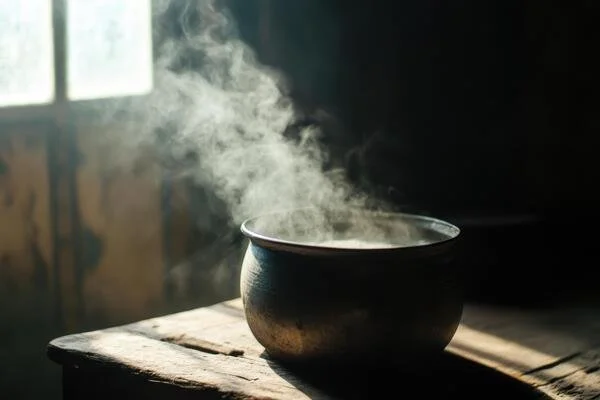
Herbal steam fumigation is the practice of cleansing the air and surrounding environment by boiling herbs or essential oils in water, allowing steam to carry their volatile compounds into the atmosphere. Unlike dry fumigation (burning herbs or resins) or direct steam inhalation (personal therapy), herbal steam fumigation bridges both: it moistens the air while dispersing antimicrobial, aromatic, and terrain-shifting volatiles.
The herbs most often used for this purpose are those with potent antimicrobial essential oils, such as: Oregano, Thyme, Eucalyptus, Rosemary, Sage (Salvia officinalis), Clove, Cinnamon, Juniper berry, Frankincense, Myrrh. These herbs and resins are strong enough to not only improve odor and atmosphere but also reduce microbial load in the air, a practice deeply rooted in traditional medicine and validated by modern studies on volatile antimicrobials.
-
👉Qualities describe the felt nature of a substance or practice, and how it acts in the body beyond nutrients or chemistry.
Aromatic – Aromatic means the substance is volatile, dispersive, and penetrating, moving quickly through air and affecting the senses and environment.
Moistening – Introduces water vapor into the air, softening dryness and hydrating the surrounding atmosphere.
Clearing – Reduces microbial presence, neutralizes foul odors, and restores freshness.
-
Stale, stagnant, or foul indoor air (e.g., after illness, spoiled food, musty environments)
Sickrooms during or after infectious outbreaks
Dry indoor climates (winter heat, arid environments) where humidity + aromatic cleansing are needed
Ritual or transitional contexts, where cleansing of both microbes and “energetic heaviness” is desired
-
1st Degree – A simmer pot with mild aromatics (e.g., rosemary, sage) for general freshness and air quality improvement.
2nd Degree – Targeted antimicrobial fumigation with strong herbs (e.g., oregano, thyme, eucalyptus) for sickroom or post-illness cleansing.
3rd Degree – Ritual or clinical use with resins and powerful aromatics (e.g., frankincense, myrrh, clove, cinnamon) for deeper purification.
4th Degree – Intensive fumigation for high-risk or epidemic contexts requiring significant microbial reduction and environmental resetting.
-
Volatile antimicrobials – Phenols, terpenes, and aldehydes aerosolize in steam and reduce bacterial, viral, and fungal presence in the air.
Humidification – Water vapor increases ambient humidity, which prevents excessive drying of mucous membranes and supports respiratory defenses.
Olfactory-limbic signaling – Aromas enter the olfactory pathways and directly influence the limbic system, altering mood, stress responses, and memory.
Deodorization – Volatile oils neutralize foul odors and restore freshness in the surrounding environment.
Symbolic terrain shift – Rising steam signifies cleansing, renewal, and the lifting of heaviness both physically and symbolically.
-
Minimal systemic interactions since exposure is airborne.
Possible additive effects if combined with internal respiratory herbs or diffused essential oils.
Strong phenolic oils (oregano, thyme, clove) may irritate sensitive airways and should be used cautiously in those with asthma.
Avoid in severe asthma or COPD without adequate ventilation, as steam and volatiles may irritate airways.
Provide good ventilation to prevent excessive dampness or mold from repeated fumigation.
Do not use toxic or harsh essential oils (e.g., pennyroyal, camphor in high concentration).
Use diluted amounts — only a few drops of essential oil are sufficient for a room. Once the aroma fades, you can reheat the same pot to continue releasing volatiles, or dump the decoction into a new pot and move it into another room for sequential cleansing.
Avoid prolonged boiling to the point of burning the herbs or oils, as this can produce irritating fumes.
Exercise caution around infants, elderly individuals, and pregnant people, using only gentle options like sage, rosemary, or frankincense.
Indicated Environmental Patterns
👉 Indicated environmental patterns describe the qualities of a space such as heaviness, stagnation, dryness, or agitation, where this remedy helps restore balance and harmony.
-
Congestive (Primary Indicated Pattern) – When the air feels heavy, stagnant, or damp, allowing microbes and odors to accumulate.
Examples: Musty, poorly ventilated spaces; Post-illness rooms needing circulation; Environments with lingering heaviness from smoke, food, or dampness. -
Toxic Congestion (Secondary Indicated Pattern) – When stagnant air carries irritants, microbes, or “energetic debris.” Examples: Sickroom cleansing after flu/cold; Removing accumulated smoke or pollutants; Traditional fumigation after gatherings.
Excitation (Secondary Indicated Pattern) – When the environment feels overactive, sharp, or agitating to the senses. Aromatic steams balance by softening harshness and calming the space. Examples: Overheated rooms, Excess electrical overstimulation, Restless “tense” air.

-
Traditional & Ethnobotanical Sources
Buhner, S. H. (2012). Herbal Antibiotics: Natural Alternatives for Treating Drug-Resistant Bacteria. Storey Publishing.
→ Discusses antimicrobial effects of aromatic herbs when used in fumigation and steaming.Duke, J. A. (2002). Handbook of Medicinal Herbs. CRC Press.
→ Includes traditional uses of fumigation with herbs such as sage, thyme, and rosemary.Cserháti, T., Forgács, E., Deyl, Z. (2005). Biological properties of essential oils: A review. Acta Botanica Hungarica, 47(1–2), 29–60.
→ Documents historical use of essential oil vapors for cleansing air and controlling pathogens.Scientific & Modern Research
Norrish, M. I., & Spelman, K. (2013). Medicinal properties of culinary and aromatic herbs in steam and fumigation. Journal of Ethnopharmacology, 145(3), 686–695.
→ Evidence that steam and aromatic vapor carry active compounds into air with antimicrobial and immune-supporting effects.Kiyohara, H., et al. (2012). Inhalation of essential oil vapors: Antimicrobial and immunomodulatory properties. Evidence-Based Complementary and Alternative Medicine, 2012.
→ Shows inhaled vapors affect both microbes in the environment and host immune response.Sharma, A., & Cannoo, D. S. (2016). Fumigation practices in traditional medicine systems: Antimicrobial and ritual roles. Journal of Ayurveda and Integrative Medicine, 7(4), 277–282.
→ Reviews fumigation practices across cultures (Ayurveda, TCM, Islamic, Native) for environmental cleansing and health.Kavanaugh, N. L., & Ribbeck, K. (2012). Selected antimicrobial essential oils eradicate biofilms and enhance room air hygiene. Applied and Environmental Microbiology, 78(11), 4057–4065.
→ Demonstrates essential oil vapors (thyme, oregano, cinnamon) reduce microbial load in enclosed spaces.Sharma A, et al. “Effect of medicinal smoke on indoor air quality.” J Ethnopharmacol. 2007.
Mohagheghzadeh A, et al. “Medical applications of incense in history and its possible role in modern medicine.” Avicenna J Phytomed. 2012.
Ali B, et al. “Essential oils used in aromatherapy: A systemic review.” Asian Pac J Trop Biomed. 2015.
WHO Traditional Medicine Strategy (2014–2023): Notes on herbal fumigation for infectious disease contexts.
