
Somatic Shaking / Neurogenic Tremoring
Functional Profile of
Somatic Shaking /
Neurogenic Tremoring
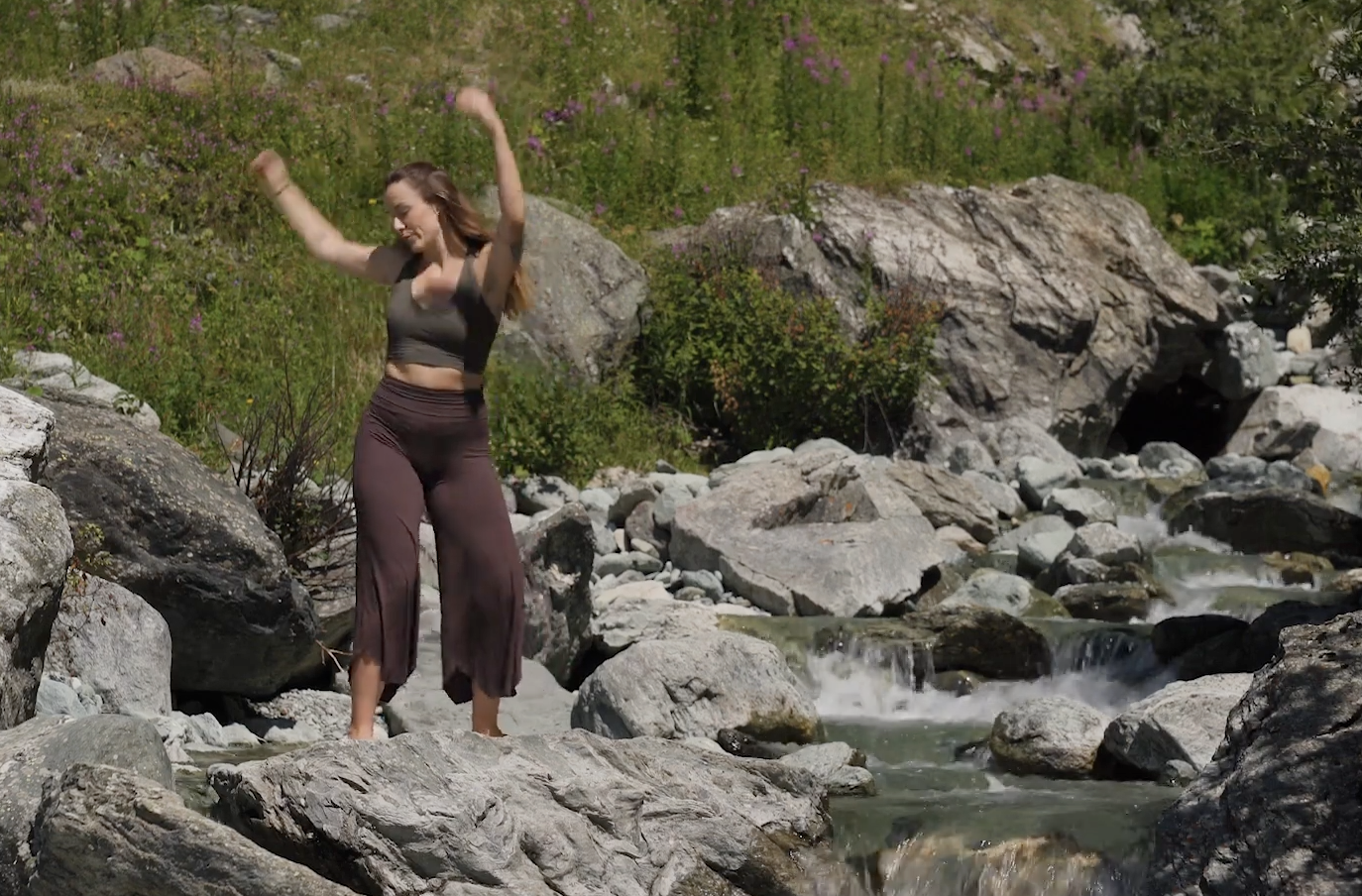
Somatic shaking uses the body’s natural tremor reflex to discharge stored stress, emotional tension, and survival energy from the nervous system. Instead of processing emotions through thoughts, shaking releases them through the body, completing the stress cycle and restoring parasympathetic regulation.
-
👉Qualities describe the felt nature of a substance or practice, and how it acts in the body beyond nutrients or chemistry.
Mobilizing, decompressive, liberating, soothing, regulating
Mobilizing – moves stuck emotional charge and trapped stress hormones.
Decompressive – releases deep fascial and diaphragmatic tension.
Liberating – frees the body from freeze/hold patterns and emotional bracing.
Soothing – reduces sympathetic arousal and softens internal agitation.
Regulating – stabilizes the nervous system by restoring vagal rhythm.
-
Primary Actions
Discharges stored sympathetic energy (adrenaline/cortisol release from tissues)
Resets the freeze response (periaqueductal gray + subcortical reflex completion)
Activates ventral vagus nerve → shifts into parasympathetic state
Reduces muscular guarding + fascia contraction
Improves emotional processing by lowering limbic overactivation
Secondary Actions
Improves diaphragmatic mobility
Reduces anxiety looping and rumination
Improves sleep by reducing residual stress chemistry
Increases felt sense and embodiment
Talking about emotions brings understanding. Shaking releases the charge.
-
The Primary Indicated Pattern is the main state where this remedy works best. Secondary Indicated Pattern(s) are the patterns that often develop over time when the primary state is left unaddressed. The primary pattern must be supported first, as this allows the secondary patterns to naturally ease or resolve.
👉Affinities are the organ systems and tissues where the remedy acts most strongly.
Nervous System / Emotional Terrain (Primary Affinity)
Primary Indicated Pattern — Tension + Dysregulated (sympathetic dominance)
The nervous system remains “on alert,” unable to downshift after stress; body feels braced, tight, or activated. Examples: Anxiety rooted in activation (not emptiness), Heart racing during overwhelm, Emotional pressure with no clear trigger, Irritability or agitation that feels “in the body”
Shaking completes the unfinished stress response and discharges survival energy from the musculature and fascia. This reduces sympathetic activation and restores regulation.
Emotional / Trauma Memory Storage (Secondary Affinity)
Secondary Indicated Pattern — Freeze + Dissociation (autonomic immobility)
Emotional shutdown; body feels numb, collapsed, or checked out.
Examples: “I can’t feel anything,” emotional flatness, shutdown after conflict.ßTremoring reactivates micro-movement and thawing where the freeze response held immobilization.
No talking required. No story required.
-
Stand or kneel with feet hip-width apart.
Soften knees and begin loose, gentle bouncing.
Shake arms, hands, jaw, and shoulders, let movement be messy.
Allow tremors to emerge naturally; don't force control.
Continue 2–6 minutes or until you feel internal downshift: sighing, yawning, deeper breath, emotional release (tears, laughter, warmth)
Key: There is no goal.
You’re letting the body finish what stress interrupted. -
After shaking, follow with something stabilizing and grounding:
Warm herbal tea (lemon balm, tulsi, chamomile)
Slow diaphragmatic breathing (4–6 breaths per minute)
Grounding food (banana, cooked oats, warm broth)
Mobilize → then stabilize.
Most people need grounding afterward because shaking opens the system.
-
Active panic attack (use grounding first, shaking afterward)
High blood pressure crisis
Severe trauma flashback (do with practitioner until regulated)
Pregnancy: allowed, but avoid aggressive shaking of abdomen/pelvis
If someone becomes dizzy → stop and slow breathing.

-
Levine, P. A. (2010). In an Unspoken Voice: How the Body Releases Trauma and Restores Goodness. North Atlantic Books.
→ Trauma discharge through tremor completion.Berceli, D. (2015). The Revolutionary Trauma Release Process. Namaste Publishing.
→ TRE method (neurogenic tremoring).van der Kolk, B. (2014). The Body Keeps the Score. Viking.
→ Stored trauma is somatic, not cognitive.Porges, S. W. (2011). The Polyvagal Theory. Norton.
→ Tremoring shifts from sympathetic to parasympathetic via vagus nerve.Schauer, M., & Elbert, T. (2010). Dissociation following traumatic stress: Neurobiological mechanisms of freeze. Journal of Traumatic Stress, 23(6), 654–662.
→ Freeze response involves immobility + muscular contraction.
